The chronic pain workshop was upstairs, but I was sobbing in the washroom, loudly. Despite what you may have gathered from recent reports on my blog, I’m not actually much of a crier. I’m definitely not a public crier. But here I was.
I’ve been sick for a long time. Navigating my illness has been difficult, and I often feel like I’m on my own. I walked into a chronic pain workshop developed at a top university expecting to meet experts, people who studied chronic pain, who knew my illness and what living with it was like inside and out. But they weren’t experts and they were fresh out of a training for this program that I quickly realized wasn’t even designed for my kind of condition and which was kind of offensive to boot. Terribly disappointed, I sat transfixed with distress as the instructors read basic and patronizing advice from their manuals. How could my counsellor have sent me here? I don’t need to talk about adding “Relaxation and Better Breathing” to my “Self-Management Tool Box” – after 23 years of chronic migraine, I’ve got that figured out.
It was hard, too, to sit in a room with people talking about their illnesses and pain, even as superficially as this. Normally I can talk about my own illness dispassionately, but here I found I couldn’t speak at all. If I opened my mouth I wasn’t sure what would come out. A wail of grief, a shriek of rage? Nothing appropriate for a polite circle of cardigan-clad folks under fluorescents on a Sunday afternoon.
At the end of the class we were asked to draw up an action plan for the next week with a small goal we really wanted to accomplish and that we were certain we could accomplish. We had to fill out worksheets with big, childish font and blanks for our answers. I thought of the project management software I use, my daily focus lists, and sighed, but I tried to get into the spirit of the exercise. Sometimes simplifying leads to new insights! I chose a bit of reading I need to do to address one of the comments my advisor made on my proposal.
Right off the bat, there was trouble. Everyone else’s goals were related to the “self-management tool box” – they chose some kind of light exercise or relaxation activity. While their goals got a nod and a smile, the facilitator challenged me, “Do you really want to do that?” I thought this was strange since I’d specifically cited my illness’s effect on my career as the reason I was there during introductions. After I’d assured him that I did indeed want to do the thing I said I wanted to do, he looked meaningfully at the class and reiterated that we won’t be successful unless we choose actions that are personally meaningful to us. While I considered making a snarky comment about how personally meaningfully neck stretches might be another participant, he turned back to me and asked me more details about my goal. We had to rate our confidence on a scale of 0 to 10 and we weren’t passed unless we had confidence of 7. I had confidence of 6. So he asked what I could do to make myself more confident, maybe read less often? I tried to explain that I couldn’t predict how I’d feel, that I could never be “very confident” that I’d be well enough to do anything at all in a given week, and he kept saying I needed to downgrade my goal. I don’t think I got a full sentence in. I eventually nodded, too upset to argue, while he confidently lectured the group on achievable goals.
That’s when I ran. Ashamed, I thought, why didn’t I just write down 7? I knew that’s what they wanted. But 7 represented very confident, and I wasn’t.
How did I end up sobbing in the washroom from that interaction? It wasn’t because I got a failing grade on my action plan worksheet (though I have to admit that stings a little). When the facilitator insisted on realistic goals that I could be totally confident of, I imagined a life of action plans for my worst weeks and it cracked me like an egg. I don’t know when a week so bad I cannot work at all will happen, but happen they do with unfortunately frequency. They are very hard.
If I want to check “very confident” on the worksheet box, I can write down things like “look at the ceiling,” “drink enough water,” “change your ice pack regularly,” “check twitter twenty eight times”, and “meditate three times” because that’s what a bad week looks like and bad weeks aren’t that rare. But those aren’t goals I can write down every week and find my life worth living. And besides, I know how to have a bad week and I’m always prepared with ice packs, food, drugs, etc.
I refuse to plan my life for the bad weeks, but I cannot pretend that they do not exist. I am trying, desperately, to find some kind of life in the balance. I felt confused and angry and very upset to be chastised for acknowledging uncertainty in a chronic pain workshop.
I was also upset because the facilitator reminded me of all the terrible interactions with my neurologists when I was teenager. All those cold rooms by myself with a clearly busy and important man, while I was sick and confused and afraid and trying to explain myself, but constantly dismissed. Here was a proud man bragging about his research background who interrupted and talked over me and dismissed my experiences. It didn’t matter that I’m older now and was smartly dressed, that I’m clever and well educated, that I know an incredible amount about living with chronic illness and especially migraine. I was disappointed that I couldn’t speak firmly and clearly, that my normal calm abandoned me and that all I had was a lump in my throat and an embarrassing waver in my voice when I tried to make myself heard.
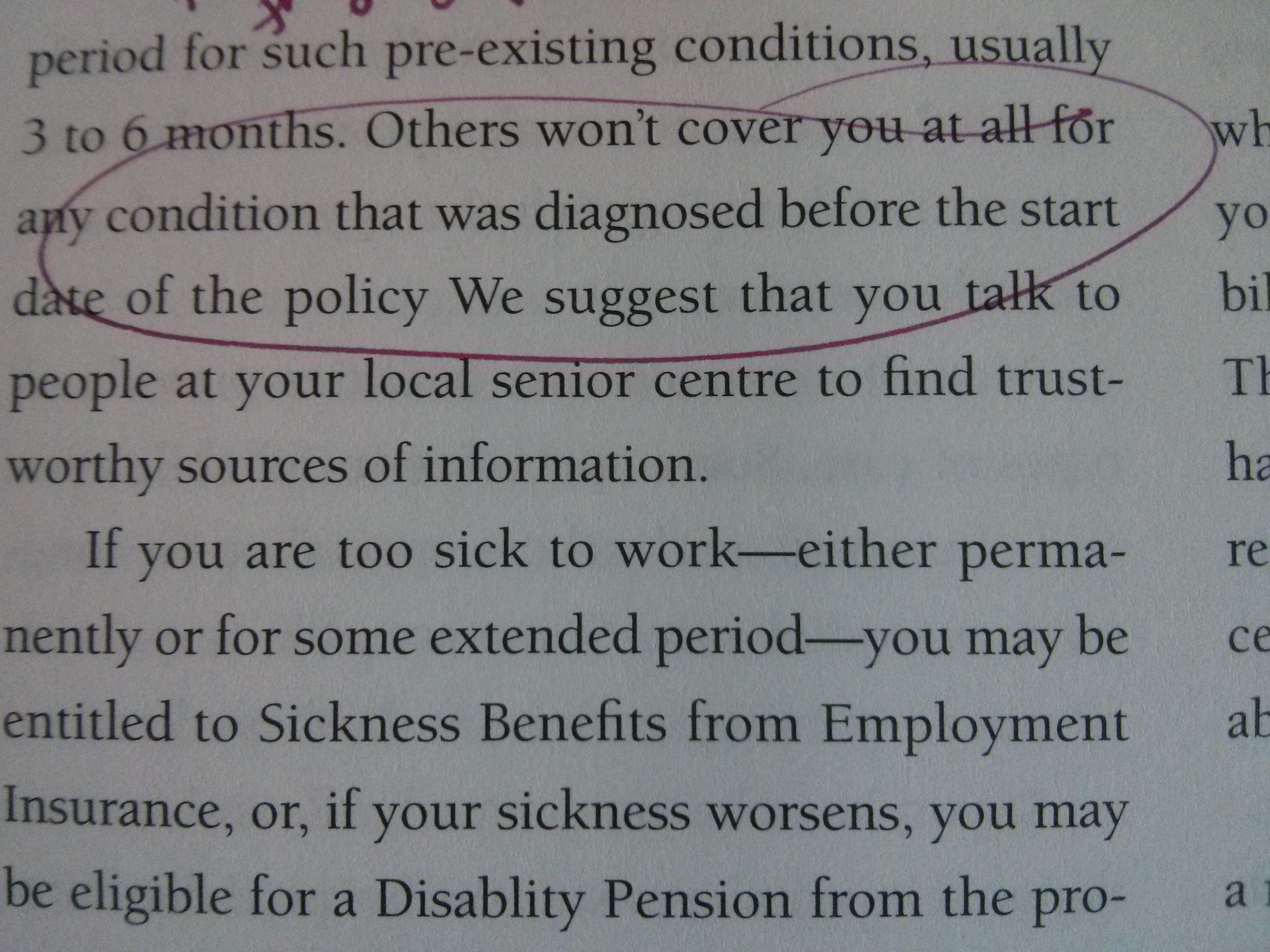
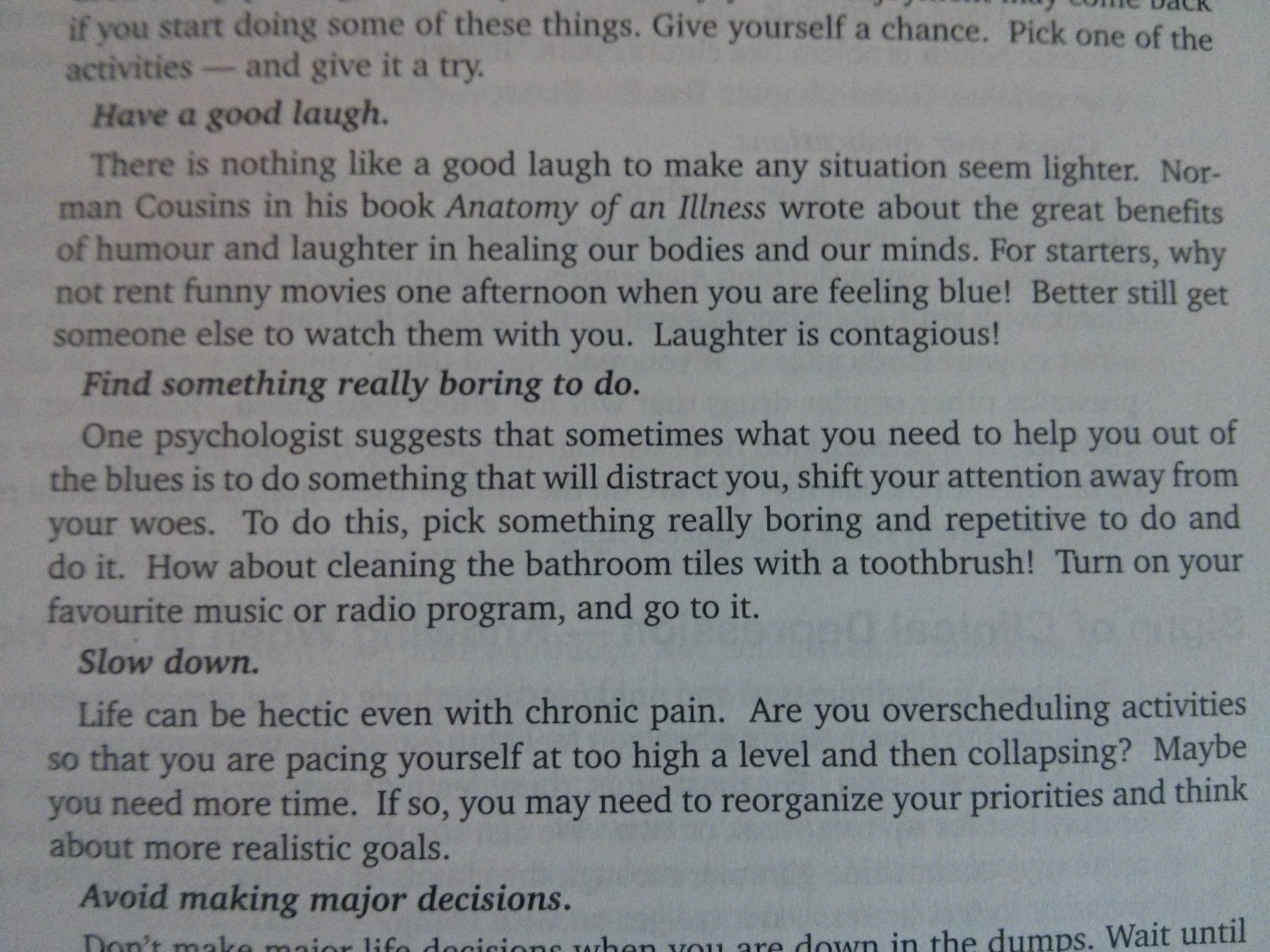
I read the book the rest of the workshop is based on yesterday. It does cover the basics of living with chronic pain or illness, but it is very, very basic. It is also offensive and harmful, suggesting that people who are struggling are at fault for being bad “self-managers,” a phrase I quickly came to loathe. The book constantly minimizes the struggles of patients and oversimplifies and over sells solutions. It almost completely ignores the enormous structural issues they must deal with. The few times it mentions structural issues, it does so in a way that puts all responsibility on the patient – it’s all about “managing” your response (Got the blues because private insurance won’t cover your pre-existing condition and you have to move into the nursing home with abuse problems? Go scrub the bathroom with a toothbrush to distract yourself!). It hardly mentions uncertainty, one of the biggest struggles to living with many chronic conditions. It cites discredited or old and incorrect research in several places or is just downright ignorant or tone deaf.
The workshop has 5 more two and a half hour sessions. The only benefit I see from attending future sessions is potentially befriending some of the other patients in the workshop. But I have dear people in my life that I don’t get to spend enough time with already. And there are much better things I could be doing for my migraines and my PhD with 12.5 hours than getting talked down to by an obtuse and self-important facilitator. I do worry if that I don’t go, my counsellor and doctor will think I’m not taking my treatment seriously, that by withdrawing from the workshop they’ll think I’ve “failed” and am a bad “self-manager.” I guess I’ll find out.
All linked quotes are from Living a Healthy Life with Chronic Conditions except the toothbrush quote which is from the Chronic Pain Self-Management Program Workbook.